
Devotionals
Valuable Lessons from the Cursed Fig Tree

One day Jesus and His twelve disciples walked from Bethany to Jerusalem. On the journey between towns that left them hungry and weary, from a distance they saw a leafy fig tree.
Ah, it must have felt wonderful to rest in its shade while easing their weariness, perhaps that is what crossed the disciples' minds. But the Teacher did not think the same way. Instead, He looked for fruit from the fig tree to fill His stomach, and of course, found none because it was not the season.
Jesus was angry, then cursed the fig tree until it withered down to its roots. The disciples were astonished to see it. The tree obeyed the command of Jesus, did not “defend itself” even though that condition was not its fault (Markus 11:12-14, 20-24).
Yet it turned out that through this fig tree Jesus taught His disciples about faith.
The Fig Tree Died So the Disciples' Faith Could Grow

I used to wonder, why did Jesus look for fruit from the fig tree out of season, then curse the tree because it did not give Him what He wanted. It is impossible that Jesus could not endure hunger; He was able even to fast for forty days. Besides, Jesus surely understood the natural cycle of fig trees because He is God the All-Knowing.
Moreover, it would certainly have been very easy for Jesus to create whatever food He wanted. Just a short time earlier, He fed 5,000 people with only five loaves and two fish (Markus 6:30-44). Why not do that for them as well, instead of going to the trouble of looking for fruit behind the tree's leaves?
The next day, on the way out of Jerusalem, Peter was astonished and exclaimed, “Rabbi, look, the fig tree You cursed has withered (Markus 11:21).”
Seeing Peter's amazement and that of the other disciples, Jesus did not boast but answered, “Havefaith in God (Markus 11:22).”
This is the most important counsel Jesus conveyed through the tragedy of the fig tree. Perhaps, up to that point, Jesus saw that the disciples did not yet fully believe in Him, even though His time was drawing near. His disciples needed strong faith to face the great challenges ahead. Through the incident of the fig tree, Jesus wanted to show how He has power over all things. He affirmed to His disciples that whatever they asked of God, as long as they believed, they would receive.
“Truly I tell you, whoever says to this mountain, ‘Be lifted up and thrown into the sea!’ and does not doubt in his heart, but believes, that what he says will happen, it will be done for him. Therefore I tell you: whatever you ask and pray for, believe that you have received it, and it will be given to you.” – Mark 11:23-24
“Put to Death” These 3 Things So You Can Grow

When His disciples saw this, they were amazed and said: "How could the fig tree wither so suddenly?" – Matthew 21:20
I imagine what they saw at that moment: as if given a cinematic effect, a lush tree instantly became dry and barren, its leaves turning yellow and falling to the ground. Not long after, the tree died, and just as the Lord Jesus declared to it, it would never bear fruit again. The disciples were further convinced of the power their Teacher possessed.
A fig tree had to be sacrificed so that Jesus' disciples could receive a miraculous experience that stayed in their hearts.
First, how important it is for the life of a Christian to bear fruit at all times, without regard to season. We must always be full of the fruits of goodness so that we are ready when Jesus comes a second time.
Second, just as the fig tree died to give an important lesson to Jesus' disciples, we too need to “put to death” several things within ourselves.
1. Put to Death Shallow Roots

Make sure our conviction is truly strong in the Lord, not merely because we are following others. Roots that are planted deep can support a great tree. In the same way, deep conviction will support us so that we remain steadfast when facing various severe challenges in life.
“Let yourselves be rooted in Him and built up in Him.” – Colossians 2:7a
2. Put to Death the Empty Trunk
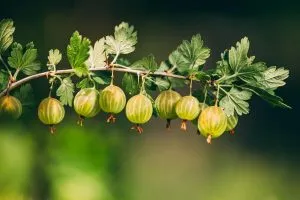
Make sure our lives produce fruit that can be seen and enjoyed by many people, so that our presence brings blessing to others. Other people can feel the difference when we are among them.
“But the fruit of the Spirit is: love, joy, peace, patience, kindness, goodness, faithfulness, gentleness, self-control. There is no law against such things.” – Galatians 5:22-23
3. Put to Death Lush Leaves

Make sure the religious activities we practice are in harmony with our deeds. Lush leaves on a fig tree are like an attractive appearance but empty, without fruit. Jesus criticized the lifestyle of the scribes, who were diligent in worship but liked to receive honor from people. Their hearts and lives were full of sin and far from the truth (Markus 12:38-40).
Nothing is wasted, including the fig tree Jesus cursed. Let us always hold on to its valuable lesson. May the tree of our faith not only have thick leaves, but also be rich with fruits ripe that bring goodness to the world. Amen.
About the Author

Digital Ministry Team
The Digital Ministry Team is the digital ministry of GKDI (Gereja Kristus di Indonesia), bringing the good news of the gospel into digital spaces — through articles, videos, and content anyone can reach, anytime.
We write about faith, family, work, and everyday struggles — the real things people wrestle with, seen through an honest and down-to-earth biblical lens. Our hope is simple: that every article helps you know Jesus more closely and grow together with a community.
Have a question, some feedback, or a story to share? Reach us through GKDI social media or at [email protected].
God's House, Our Home.
RELATED ARTICLES

New Life, New Beginning
Everything new is usually appealing, including a new life. That is, when we leave the old behind and step into an experience that is truly new. Speaking of a new life, there is…
Read More
Christmas Day, Time to Reflect on These 3 Things
When I was little, Christmas Day was a special day. Besides receiving many gifts from Sunday school, I was also treated to many attractions such as dramas, Christmas songs...
Read More
3 Heart Attitudes from the Song Everlasting Father
For You are my Father, the everlasting Father. I am sure many of us are familiar with this song, Everlasting Father. Its lyrics lead us to reflect more deeply on God the Father and what He does in this life...
Read More