
Devotionals
A Christian Prayer Guide from the 'Lord's Prayer' Passage
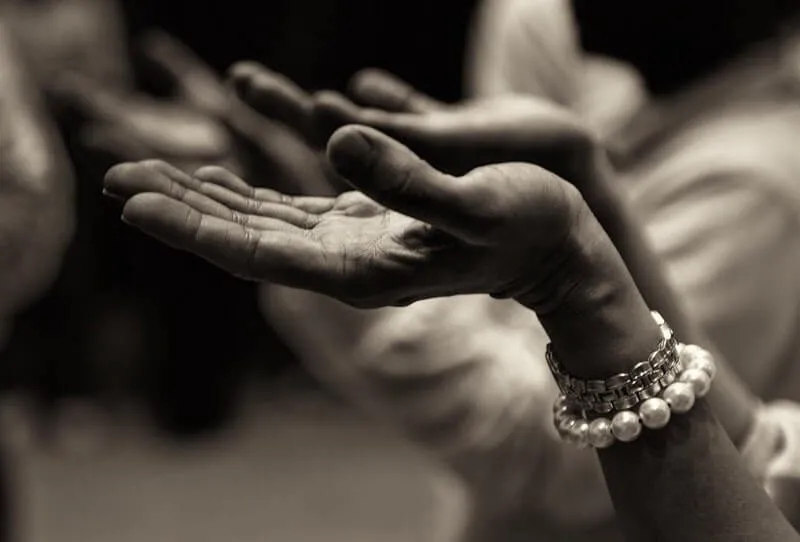
One example of prayer Jesus gave is "the Lord's Prayer". This prayer is so widely known and used by Christians as a guide for prayer. It is undeniable that Prayer is one of the clearest pictures of Faith in a Christian's life.
Through prayer you can feel peace in the midst of the turmoil and worries of your life. Through prayer you can feel and think more calmly because you see that there is hope after what you ask has been spoken to God. Also through prayer, you can feel what it means to surrender over a situation you cannot control. Yes, through prayer, you can experience so many spiritual benefits as well as good character formation.
Jesus even personally showed in His life how He alwaysprayed, how He used His time topray, how the important decisions in His ministry always began withprayer.
The simple question is: How should one pray? What is an example of biblical prayer?

In my former denomination, at the end of the “Intercessory” prayer, the prayer leader would usually say something like this: “And we will end this prayer by reciting the perfect prayer as You taught us.....” or say: “And we will perfect this prayer of ours with the prayer You taught us:...”
The question is whether Jesus said that the prayer He taught was the perfect one. Apparently not! Will my prayer become perfect if I close it by reciting the prayer Jesus taught? Also no! So how should a person pray?
First is your condition when you pray

Matthew 6:6 explains that what Jesus taught about the condition of prayer is not about closing the door or having to do it inside the house. Because if you are in a public place, does that mean you may not pray because the setting is open? Or when you are in a restaurant, you also cannot pray because other people will see you? So it is not about the place being referred to here, but about your condition. What Jesus taught is about concentrating well. When you pray, you must not let circumstances disturb you while praying.
Second is Your Motivation for Praying

In the same story in Matthew 6:5, Jesus compares the motivation of the Jewish religious leaders at that time, whose motivation in praying was to appear spiritual. In fact, throughout chapter 6, Jesus focuses on speaking about and exposing the motives behind all the spiritual activities you do. If you pray, do not do it with the motivation of being seen by others. If you fast, do not do it with the motivation of letting others know that you are fasting, with a face made to look like a starving person. It is the same with giving something to the poor, which usually not many people do. Therefore, the temptation to want to be seen as kind and loving is very great indeed.
Jesus teaches that if you give alms, the way to do it is quietly and not to announce it to many people, even if necessary the closest illustration is that of the right hand and the left hand. How much Jesus wants you to have the right motivation in doing everything related to your spiritual activities, including Prayer.
Third is the structure in Prayer

In Matthew 6:7, Jesus makes a statement that looks small but is actually very significant. He says that when praying, do not ramble on like the habit of people who do not know God. Just think about it, you may feel that you already know God, but from your prayer, God can know that you are actually someone who does not know Him.
Rambling on is the habit of someone who speaks in a disorganized way, whose flow of speech is illogical and not in a good order. For example, facts jumping back and forth in a story plot without order. As an example: if you watch a movie, when the characters who appear in it do not have a clear connection to one another, the chronology of the story is disorderly and keeps moving back and forth, or the topics of the story are all different. Can you enjoy that movie? Or even understand its plot? Of course not!
Therefore, the Prayer Jesus taught (its name is not the Lord's Prayer), is a form or structure for praying so that you do not pray in a rambling way and so that it also shows that you know God.
STRUCTURE IN PRAYER (according to the "Lord's Prayer" passage - Matthew 6:9-13)
Our Father in Heaven, Hallowed Be Your Name

The beginning of a prayer is relationship. You know whom you trust as your God, and you also know that God. The word Father shows a close relationship, yet there is a different degree when Jesus adds the words 'in Heaven.' Heaven shows a perfect state, but also the goal or reward for you who live according to the Word. By saying Father in Heaven, you are saying that you know God wants to be close to you, but that God also has a different degree from you. You want to be close, but with respect. The second thing is that you know who God is, by saying the words Hallowed Be Your Name.
Beyond words, Praise (Praise) also describes what you know about God. I prefer to say that structured prayer is prayer that begins with knowing who God is, knowing everything about God, whether through God's works, God's character, God's help, God's plans, everything about the God you know, through God's Word and also through your life that is in accordance with God's Word.
YOU WANT TO BE CLOSE, BUT WITH RESPECT.
Your Kingdom Come
In Jesus' conversation with the Pharisees in Luke 17, Jesus states that the Kingdom of God is among them. So what does it mean if you pray and speak about the coming of the Kingdom of God? Is the Kingdom of God something that comes at the end of the age, or is the Kingdom of God already here?
In preaching the Word, there are the same words spoken by John the Baptist and also Jesus, namely about repentance and that the Kingdom of God is near. If Jesus said that the Kingdom of God was already in their midst at that time, then it can be concluded that prayer for the Kingdom of God to come is speaking about the Church of Christ. This is the part where you pray for the congregation where you are, or for the ministry and group where you are involved.
Your Will Be Done on Earth as It Is in Heaven

From where do you know the will of God? Surely we all agree that to know God's will, we receive it only through God's Word. In this section, I will pray about the passage of Scripture I studied that day (if I read the Word first), or pray over my reading material from the previous day (if I pray first). This section is the part where you reflect on and meditate on God's Word, what you learned, what message you received, what decisions or changes you should make so that God's will may happen in your life.
And Give Us Our Daily Bread
After the first 3 things about God, God's Name, God's Congregation, and God's Word, only then do you pray for what you need. It is very clear that behind the words give what is sufficient, there is an extraordinary character of surrender, because what is being asked for is what is enough for your needs. Then people say: “There is the principle of according to faith, right? If you ask for a little you will surely be given a little, if you ask for a lot you will also be given a lot according to the measure of your faith!”. The problem is that everything related to greed is sin, and secondly, the Bible never contradicts the principles of God's Word, everything is in one line. If from the beginning your requests are always for a lot, I can be sure that you are a person who does not know God's Word. Jesus teaches us to ask according to what you need.
And Forgive Us Our Trespasses

Notice the connection from the request for today's needs, in which what is needed is humility and a pure heart before God, a spiritual heart and not a worldly one. Only then is it followed by words asking for forgiveness. Usually in this part we can cleanse our conscience by openly examining the motives of our hearts, the impurity of our hearts, and all the hidden things that can destroy your spirituality. Is there also confession of sin? That is interesting for us to discuss. But from other Bible verses, we find that confession of sins is always done together, or to one another.
The Faults of Others

What is interesting about this section is when Jesus includes the element of other people in your prayer. Who are the other people who hurt you? Are there other people involved in your life? Who are the other people who help you? The point is that in this section, you pray for specific other people whom you will include in your prayers, whether family, friends, brothers/sisters, the government, even the people who hurt you!
And Do Not Lead Us into Temptation but Deliver Us from Evil
This is the closing section where you ask for protection from God. Protection from evil things, protection from temptation, even deliverance from evil or wicked things.
For Yours Is the Kingdom…
The last part of that prayer is an addition that was added because it was used in Christian worship rituals in the Middle Ages. It is not part of the prayer structure that Jesus taught. You do not need to say it.
So when praying rightly, it has the following principles: you must pay attention to the condition when you pray; whether you can concentrate well when praying, you pray with the right motivation motivation; not to appear spiritual, but because you truly want to be close to God, and lastly you must pay attention to the structure in prayer so that your prayer becomes a right prayer, like someone who prays because he knows God.
-Related Articles:
-About the Author

Digital Ministry Team
The Digital Ministry Team is the digital ministry of GKDI (Gereja Kristus di Indonesia), bringing the good news of the gospel into digital spaces — through articles, videos, and content anyone can reach, anytime.
We write about faith, family, work, and everyday struggles — the real things people wrestle with, seen through an honest and down-to-earth biblical lens. Our hope is simple: that every article helps you know Jesus more closely and grow together with a community.
Have a question, some feedback, or a story to share? Reach us through GKDI social media or at [email protected].
God's House, Our Home.
RELATED ARTICLES

New Life, New Beginning
Everything new is usually appealing, including a new life. That is, when we leave the old behind and step into an experience that is truly new. Speaking of a new life, there is…
Read More
Christmas Day, Time to Reflect on These 3 Things
When I was little, Christmas Day was a special day. Besides receiving many gifts from Sunday school, I was also treated to many attractions such as dramas, Christmas songs...
Read More
3 Heart Attitudes from the Song Everlasting Father
For You are my Father, the everlasting Father. I am sure many of us are familiar with this song, Everlasting Father. Its lyrics lead us to reflect more deeply on God the Father and what He does in this life...
Read More