
Devotionals
A True Christian or a Copycat Christian?
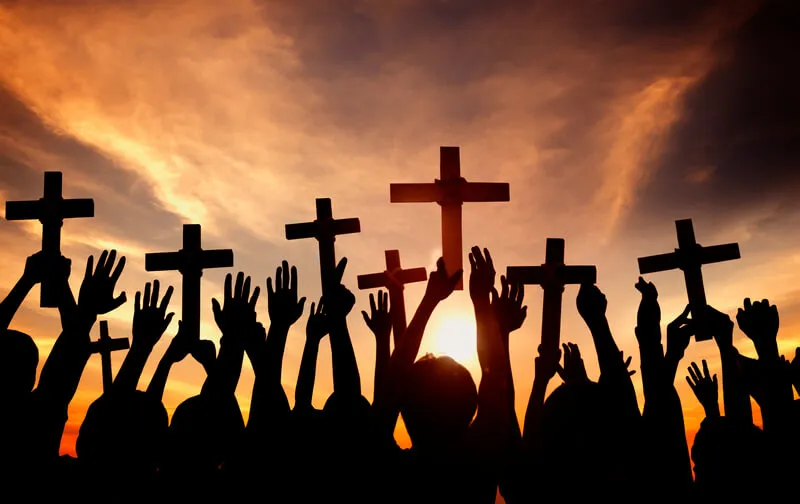
The label “true” and “copycat” in the title above are not permanent tags attached to who we are. Nor are they meant to judge the measure of someone’s faith . A “true” Christian and a “copycat” Christian are two simple descriptions that help us reflect on our spiritual journey so far.
For that reason, there are a number of questions we can ask ourselves. Reflect on these three things to see what the posture of your heart is as a Christian today:
1. Is My Conviction Borrowed from Other People or Certain Things?

Borrowing in this context does not mean that we do not believe in God. However, our faith is not based on our own conviction or our personal relationship with God. Our conviction is shaped by things such as status, parents, a boyfriend or girlfriend, a mentor, church, a group, and other things.
Lot, Abraham’s nephew, could be described as having a faith that was “riding on” the faith of Abraham. Read Genesis 12-14 and Genesis 18:16-19:38 to learn the story of Abraham and Lot.
From there he moved on to the hill country east of Bethel. He pitched his tent, with Bethel on the west and Ai on the east, and there he built an altar to the LORD and called on the name of the LORD. – Genesis 12:8
Every time Abraham reached something, whether a place or a certain condition, he always built an altar to God. In the book of Genesis, you will find a number of verses about Abraham building altars to God.
Abraham had a personal relationship with God, because it says, “There he built an altar to God and called on the name of the Lord.” Through that altar, Abraham spoke with God heart to heart.
Then, what about Lot?
Not a single verse mentions that Lot built an altar to God. Even though, Lot lived together with Abraham. So where was Lot when Abraham built an altar? It does not say that he helped Abraham. We do not know whether he was busy with his own affairs or merely a spectator during the building of the altar.
True, Lot believed in God, who counted him and his family as righteous when He was about to destroy Sodom and Gomorrah (2 Peter 2:7).
However, from the matter of the altar and the absence of any record of personal communication between Lot and God, we can draw this conclusion: Lot did not have a close relationship with God. Lot was like someone riding on the faith of Abraham, who placed his trust in God.
Where are you placing your conviction today? Are you like Abraham, whose conviction is true, or like Lot, whose faith is “riding on” the faith of others?
2. Is God My Priority?

God made Abraham and Lot very rich (Genesis 13). Even though God made a covenant of blessing only with Abraham, He also blessed Lot who lived together with Abraham.
Because both of them were so prosperous, the land where they lived could not support all their livestock. As a result, quarrels often broke out between Abraham’s herdsmen and Lot’s. Abraham then took the initiative so that they would separate.
“Is not the whole land before you? Please separate yourself from me; if you take the left, then I will go to the right, or if you take the right, then I will go to the left.” – Genesis 13:9
And this was Lot:
’s response Then Lot lifted up his eyes and saw that the whole plain of the Jordan was well watered, like the garden of theLORD
, like the land of Egypt, as far as Zoar… So Lot chose for himself the whole plain of the Jordan, and journeyed eastward; thus they separated from each other. Abram settled in the land of Canaan, but Lot settled among the cities of the plain and pitched his tents near Sodom. Now the men of Sodom were exceedingly wicked and sinful against the.
LORD
based his consideration solely on logic: choosing the most fertile area. Water supply was a crucial factor for his success as a herdsman. That is why Lot pitched his tents near Sodom, among an immoral people. Lot did not think far ahead about what would happen to his spiritual life while living in a region that did not knowGod
. Would that be good for the health of his soul, his wife, and his children? How would they guard themselves and continue to hold fast to God’s commands? From camping near Sodom, the dwelling of Lot (gradually shifted into the city. Of course, by living in the city center, his business access would become easier. It was this misplaced priority that eventually caused Lot to lose everything when Sodom was destroyed)—Genesis 19:1-29 his possessions, his wife, and the good moral character of his family. Later on, the descendants of Lot became nations that did not believe in. God Priorities determine choices, and choices determine the future
The way a person makes choices shows the priorities of the heart, and in time, determines the future. This is why right priorities matter as the basis for our decisions. For example, from the beginning Lot did not actually need to separate from Abraham. He could have told his herdsmen to yield or make peace with Abraham’s herdsmen. By remaining in the same company as God’s chosen oneGod , at least the faith of Lot
would have been better guarded. Wrong priorities can lead your life toward destruction. A true Christian knows what the highest priority is, namelyGod
. But a copycat Christian will place priority on other things. What is your priority when making the decisions of life? Perhaps, just likeLot , we see the offers of the world that seem so tempting and promising at first. But Lot’s story teaches that being on God’s path God
is always better, even if we cannot yet see far into the future to view the outcome.

3. Am I Reluctant to Repent Even When There Is an Opportunity? Through the negotiation of Lot with the angel ofGod , an agreement was reached that God would not destroy Sodom and Gomorrah until the group of Lot
had reached Zoar. Then Lot
went up from Zoar and settled with his two daughters in the mountains, for he was afraid to live in Zoar; so he lived in a cave with his two daughters. – Genesis 19:30 Perhaps we wonder why Lot chose to settle in the mountains and not in Zoar? Trauma made Lot afraid Godwould rain down fire and sulfur on Zoar, considering that this place was also supposed to be judged ().
Genesis 19:21 However, did you know that at that time Lot had another choice? Rather than going up to the mountains, Lot
could have returned to Abraham. Perhaps pride or shame (after becoming poor, or because of his choice to live in the city of Sodom) made Lot drift even farther from the truth. Living in a mountain cave left that small family isolated from the outside world. Despairing of the future of their family line, the two daughters of Lot
then chose to commit sin against their father.
The older one said to the younger, “Our father is old, and there is not a man in the land to come in to us according to the custom of all the earth. Come, let us make our father drink wine, and then we will lie with him, so that we may preserve offspring through our father.” – Genesis 19:31-32
Every time we sin, we have many opportunities to repent. But sometimes, whether because of our narrow way of thinking or because of pride, we instead choose to move away from the truth. A true Christian will choose to return to God. So do not let a “copycat” mentality drive you farther and farther from the truth. Perhaps you are ashamed or afraid of what people will say, but as long as you chooseGod
, your soul will be at peace and restored. A true Christian has full confidence inGod , makes God the priority above all else, and always chooses to repent, no matter how far he or she has strayed. Let us take time to learn from the mistakes of Lot and keep striving to become true
Christians! Churches GKDI is currently present in35 cities . We have Bible Study activities in every area. If you need information or would like to get involved, contact us at contact Church 0821 2285 8686 GKDI Official: WhatsApp or / Facebook Instagram
GKDI Official Related article:
How Do We Measure Spiritual Maturity?About the Author

Digital Ministry Team
The Digital Ministry Team is the digital ministry of GKDI (Gereja Kristus di Indonesia), bringing the good news of the gospel into digital spaces — through articles, videos, and content anyone can reach, anytime.
We write about faith, family, work, and everyday struggles — the real things people wrestle with, seen through an honest and down-to-earth biblical lens. Our hope is simple: that every article helps you know Jesus more closely and grow together with a community.
Have a question, some feedback, or a story to share? Reach us through GKDI social media or at [email protected].
God's House, Our Home.
RELATED ARTICLES

New Life, New Beginning
Everything new is usually appealing, including a new life. That is, when we leave the old behind and step into an experience that is truly new. Speaking of a new life, there is…
Read More
Christmas Day, Time to Reflect on These 3 Things
When I was little, Christmas Day was a special day. Besides receiving many gifts from Sunday school, I was also treated to many attractions such as dramas, Christmas songs...
Read More
3 Heart Attitudes from the Song Everlasting Father
For You are my Father, the everlasting Father. I am sure many of us are familiar with this song, Everlasting Father. Its lyrics lead us to reflect more deeply on God the Father and what He does in this life...
Read More